There are no items in your cart
Add More
Add More
| Item Details | Price | ||
|---|---|---|---|

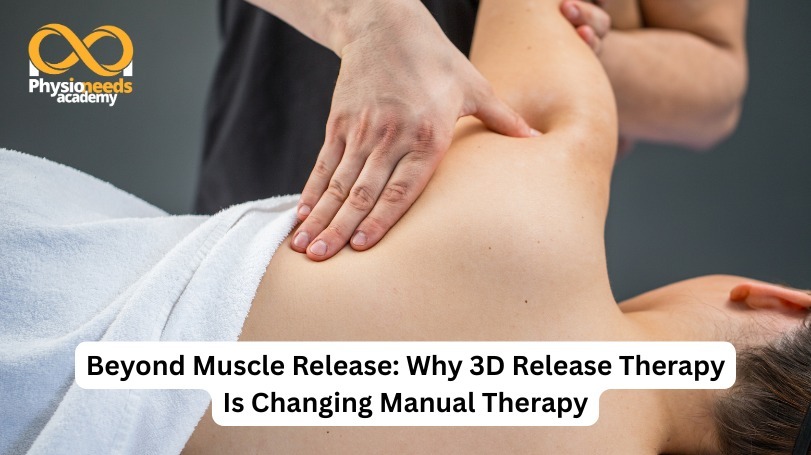
If you’ve ever felt that traditional soft-tissue techniques don’t quite “hold” their results, you’re not alone. Many therapists realize that pain, stiffness, and movement restrictions rarely exist in just one plane. This is exactly where a 3D release therapy course changes the game.
Instead of treating muscles or fascia in isolation, 3D release looks at the body as it truly works—in three dimensions, in motion, and as an interconnected system.
3D Release Therapy is an advanced hands-on approach that focuses on releasing restrictions across multiple planes of movement—not just up and down or side to side, but rotational and diagonal patterns as well.
Through precise palpation and controlled movement, therapists learn how to:
Many manual therapy methods work well in early or simple cases. But with chronic pain, postural dysfunctions, or long-standing movement limitations, the body adapts in complex ways.
Linear techniques often:
A structured 3D release therapy course teaches you how to think, feel, and treat differently.
You’ll learn to:
This approach is ideal for:
Earning a 3D release certification is more than adding another course to your CV. It reflects a shift in how you approach the human body—more integrative, more precise, and more effective.
When choosing the best 3D release therapy certification online, look for programs that emphasize: