There are no items in your cart
Add More
Add More
| Item Details | Price | ||
|---|---|---|---|

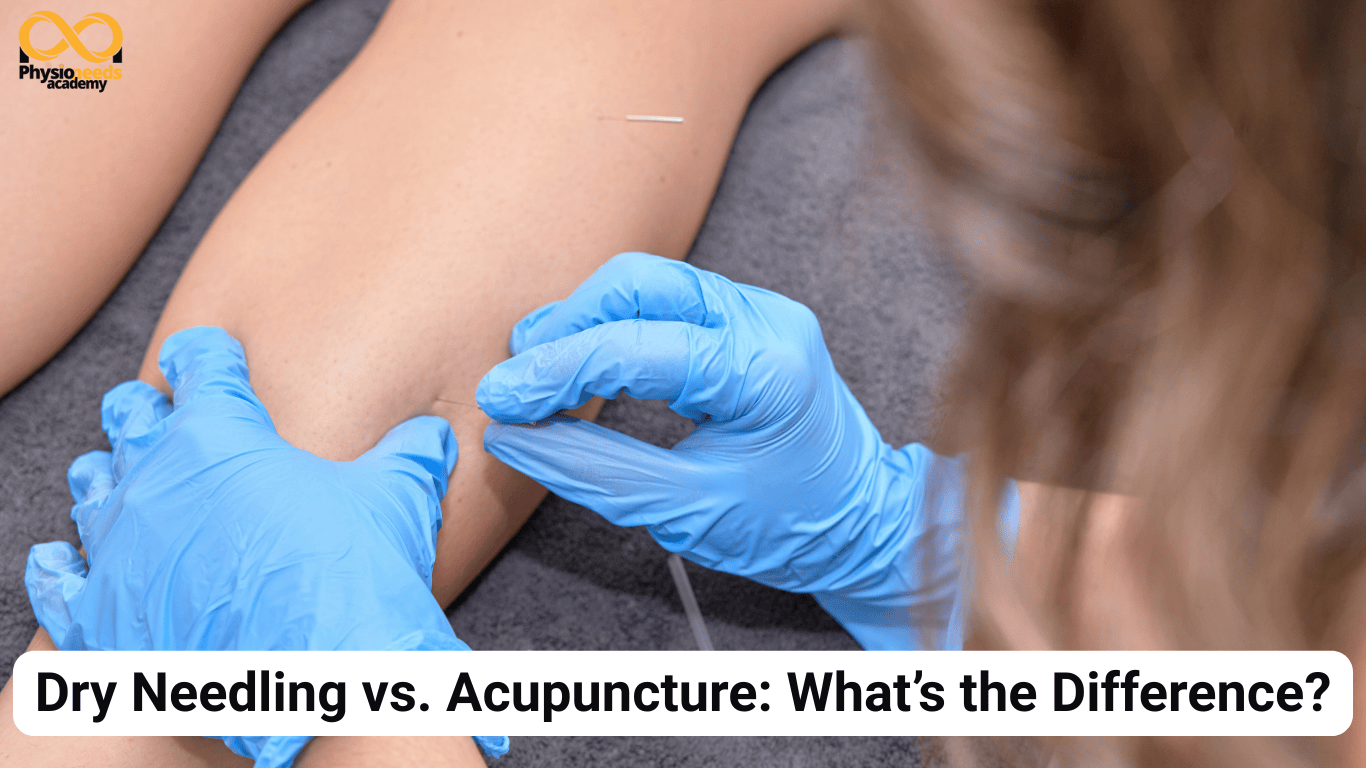
A Clinician’s Guide to Two Powerful Needling Approaches**
Have you ever treated a patient with chronic trapezius tightness, stubborn lateral epicondylitis, or persistent lumbar myofascial pain—only to feel stuck when conventional stretching or modalities fail?
That moment of clinical uncertainty is exactly where advanced needling skills elevate a physiotherapist’s outcomes.
Dry Needling and Acupuncture both use thin filiform needles… yet they stem from completely different philosophies, assessment frameworks, and therapeutic goals. For a clinician, understanding how they differ is essential—not just for competence, but for clinical reasoning, patient education, and ethical practice.
Let’s break it down with precision.
Acupuncture
A core component of Traditional Chinese Medicine (TCM), practiced for over 2,000 years.
It is based on concepts such as:
Dry Needling
A modern Western medicine technique based on:
Acupuncture
Aims at:
Dry Needling
Aims at:
Acupuncture
Needles are inserted into specific acupuncture points mapped along meridians—regardless of local muscle/tissue pathology. Example: For knee pain, points may be chosen along the stomach or gallbladder meridian.
Dry Needling
Needles are inserted into:
Energy vs. Neurophysiology
Acupuncture Works through:
Why Physiotherapists Prefer Dry Needling
Physiotherapists are drawn to Dry Needling because it is a tissue-specific clinical intervention rooted in anatomy and manual therapy principles.
At Physioneeds Academy, Dry Needling is taught under:
Dr. Chakshu Bansal—Certified Dry Needling Instructor (South Africa) and a global educator—ensures clinicians learn:
This approach makes Dry Needling an essential skill for physiotherapists handling MSK and sports cases.
A Practical Answer
| Clinical Goal | Best Technique |
|---|---|
| Myofascial trigger point release | Dry Needling |
| Local pain modulation | Dry Needling |
| Muscle activation reset | Dry Needling |
| Chronic systemic disorders | Acupuncture |
| Holistic wellness approach | Acupuncture |
| Improving ROM in orthopaedic cases | Dry Needling |
Learn It From India’s Most Trusted CPD Brand
Dry Needling Workshop — Physioneeds Academy Safe, effective needling for pain relief and trigger point release
Hands-On Workshop/Certification
[Link to Dry Needling Course: www.physioneedsacademy.com/dryneedling] Taught by Dr. Chakshu Bansal (Ph.D., 3-time World Record Holder) and guided by Prof. Krishna N. Sharma (creator of KKMT), this program ensures: