There are no items in your cart
Add More
Add More
| Item Details | Price | ||
|---|---|---|---|

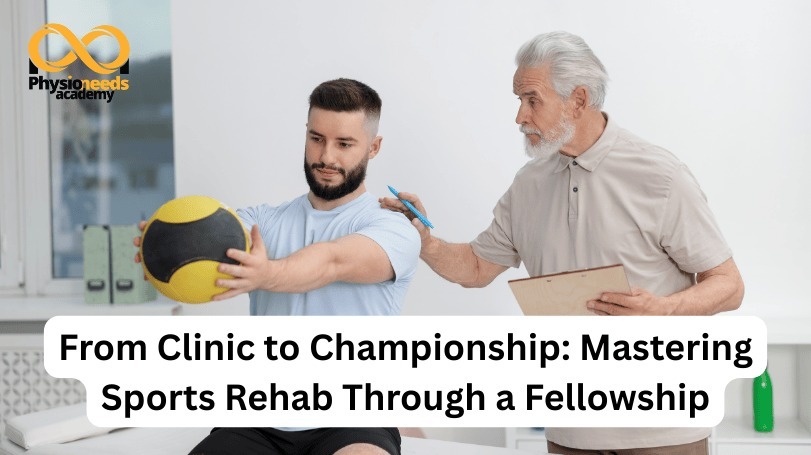
In modern healthcare, treating athletes and active individuals requires more than basic clinical knowledge. Sports injuries are complex, recovery timelines are demanding, and patients expect faster and safer returns to performance. This is where advanced training becomes essential.
A Fellowship in Sports Physiotherapy and Rehabilitation is designed to bridge the gap between theoretical knowledge and elite-level clinical practice. It equips physiotherapists with the specialized skills needed to manage sports injuries, design performance-based recovery plans, and confidently work with athletes at all levels.
The world of sports is evolving rapidly. From professional athletes to weekend fitness enthusiasts, more people are pushing their bodies to perform better. With this rise in physical activity comes a greater demand for experts in sports physiotherapy.
Sports physiotherapists focus on:
A physiotherapy fellowship is an advanced professional program designed for clinicians who want to specialize in a particular area. In this case, the focus is on sports injuries and athletic recovery.
A fellowship in sports physiotherapy typically goes beyond standard certifications. It combines academic learning, clinical case studies, and hands-on training to help practitioners build real-world expertise.
Through such programs, clinicians learn how to:
A structured sports rehabilitation fellowship program focuses on practical and scientific aspects of athlete recovery. Participants develop both clinical and performance-based skills.
Key areas of learning often include:
1. Injury Assessment and Diagnosis
Understanding mechanisms of injury, movement analysis, and sport-specific risk factors.2. Rehabilitation Program Design
Creating individualized recovery plans focusing on strength, flexibility, endurance, and neuromuscular control.
3. Performance-Based Recovery
Integrating agility drills, sport-specific training, and conditioning into rehabilitation.
4. Return-to-Play Strategies
Learning evidence-based criteria that ensure athletes return safely to training and competition.
5. Injury Prevention Techniques
Designing programs that reduce the risk of recurring injuries.
These skills help clinicians transform from general therapists into performance-focused specialists.
A fellowship in sports physiotherapy is ideal for:
Completing a sports rehabilitation fellowship program can open multiple career pathways. You may work as:
This advanced expertise also increases credibility and professional recognition within the healthcare and sports industries.
Athletes today expect faster recovery, smarter rehabilitation, and long-term injury prevention. Traditional rehabilitation approaches are no longer enough.
A modern physiotherapy fellowship prepares clinicians to integrate science, movement analysis, and functional training into rehabilitation. This combination ensures patients not only recover but return stronger and more resilient.
With the growing demand for experts in sports physiotherapy, specialized training is becoming one of the most valuable investments a physiotherapist can make.