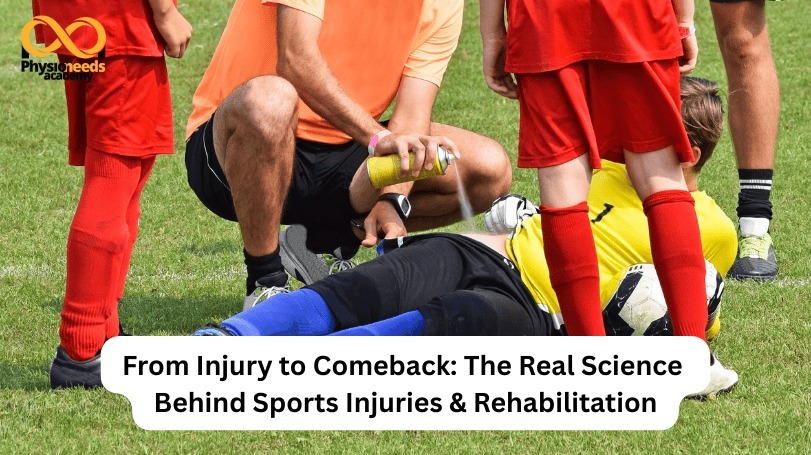
From Injury to Comeback: The Real Science Behind Sports Injuries & Rehabilitation

An athlete’s journey is rarely injury-free. From a sudden ankle sprain on the field to a lingering shoulder pain that refuses to settle, sports injuries are an inevitable part of active life. What truly defines success, however, is not the injury itself—but how well the rehabilitation is done.

This is where Sports Injuries and Rehabilitation becomes more than just treatment. It becomes a structured, science-backed pathway that helps athletes return stronger, safer, and smarter.

Why Sports Injury Rehabilitation Is Not “Just Exercise”

One of the biggest misconceptions in rehabilitation is that rest and basic exercises are enough. In reality, sports injuries demand precise assessment, tissue-specific healing strategies, load management, and return-to-play planning

Effective sports rehabilitation focuses on:

  • Understanding the mechanism of injury
  • Identifying movement and biomechanical faults
  • Restoring strength, mobility, and neuromuscular control
  • Preventing re-injury, not just relieving pain
This is why clinicians worldwide are now enrolling in a sports injury rehabilitation course to upgrade their clinical reasoning and hands-on skills.

Common Sports Injuries That Require Specialized Rehabilitation

Sports injuries vary widely based on the sport, intensity, and athlete profile. Some of the most common include:

  • ACL and meniscal injuries
  • Rotator cuff tears and shoulder impingement
  • Ankle sprains and instability
  • Hamstring and groin strains
  • Tendinopathies (Achilles, patellar, tennis elbow)
  • Stress fractures and overuse injuries
Each of these injuries requires stage-wise rehabilitation, not a one-size-fits-all approach—something taught in a structured sports injury rehabilitation training program.

What Makes Sports Injury Rehabilitation Different?

Unlike general rehabilitation, sports rehab focuses on performance restoration, not just daily function. Key components include:

  • Sport-specific biomechanics
  • Load progression and monitoring
  • Proprioception and agility training
  • Psychological readiness
  • Return-to-play criteria
This advanced approach is why professionals increasingly pursue a sports injury rehabilitation certification to work confidently with athletes at all levels.

Who Should Learn Sports Injury Rehabilitation?

A professional sports injury rehabilitation course for physiotherapists or physical therapists is ideal for:

  • Physiotherapists & physical therapists
  • Sports rehab clinicians
  • Athletic trainers
  • Strength & conditioning coaches
  • Rehab professionals working with active populations
Whether you work in a clinic, hospital, sports academy, or private practice, this specialization significantly elevates your clinical value.