There are no items in your cart
Add More
Add More
| Item Details | Price | ||
|---|---|---|---|

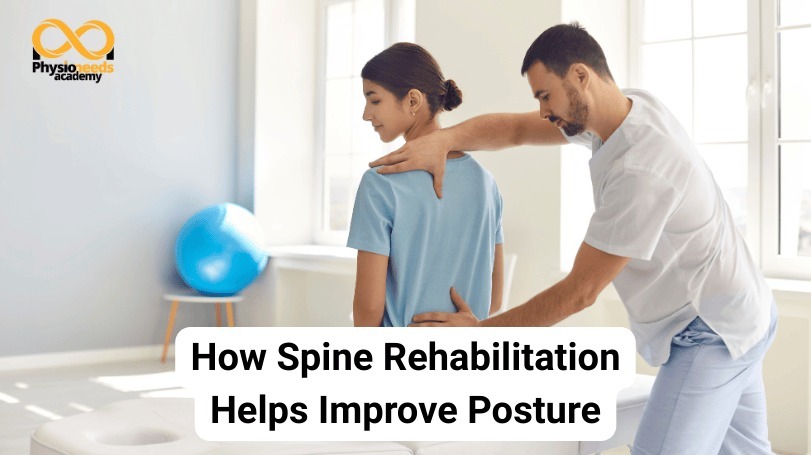
How Spine Rehabilitation Helps Improve Posture is a question many people ask when they start noticing rounded shoulders, neck stiffness, or constant back discomfort. Poor posture does not happen overnight. It develops slowly due to long sitting hours, weak muscles, stress, and lack of movement awareness. Spine rehabilitation focuses on correcting these issues in a structured and practical way, helping the body return to a natural and balanced position.
Today, posture problems affect office workers, athletes, students, and even healthcare professionals. Learning how the spine works and how to support it properly is no longer optional. This is why education-based programs such as a spine physiotherapy course and guided rehabilitation methods have become highly valuable for both professionals and individuals who want long-term results.
Posture is the position in which you hold your body while sitting, standing, or moving. Good posture keeps the spine aligned, muscles balanced, and joints stress-free. Poor posture places extra load on the neck, shoulders, and lower back, leading to pain and fatigue.
Spine rehabilitation works by addressing the root causes of posture problems. Instead of only treating pain, it improves movement patterns, muscle strength, and body awareness. Programs like a spine rehabilitation course teach how small corrections in daily habits can create big changes over time.
Spine rehabilitation uses a step-by-step approach that is easy to understand and apply. It starts with posture assessment, followed by targeted exercises and movement training.
A well-designed spine physiotherapy training program focuses on:
Learning posture correction from a structured program gives better results than random exercises. A spine physiotherapy certification ensures that physiotherapists and fitness professionals follow safe, proven methods when working with clients. It also helps individuals understand why certain exercises are used and how to perform them correctly.
Similarly, a spine rehabilitation certification builds confidence by teaching clear assessment techniques and posture correction strategies. These certifications focus on real-life applications, making them suitable for clinics, gyms, and home-based care.
The benefits of spine rehabilitation go beyond standing straight. When posture improves, daily activities become easier, and pain levels reduce naturally. Some key benefits include:
Spine rehabilitation is not only for people with pain. It is useful for a wide range of individuals.
A spine rehabilitation course is ideal for:
At this stage, it becomes clear that How Spine Rehabilitation Helps Improve Posture is not just about exercises. It is about understanding the body, correcting habits, and applying small changes consistently. This structured approach is what makes spine-focused education so effective and long-lasting.
Modern learning platforms have made spine education more accessible than ever. A spine physiotherapy online course allows learners to study at their own pace without compromising on quality. Clear videos, simple explanations, and real examples make complex topics easy to understand.
Completing a spine physiotherapy certification or spine rehabilitation certification does not require advanced language or technical difficulty. These programs are designed with simple wording and practical steps so learners from all backgrounds can benefit.
Posture improvement is a long-term investment in health. When people learn correct spinal alignment early, they reduce future healthcare costs and improve quality of life.
A spine physiotherapy course teaches posture as a daily habit, not a temporary fix. Similarly, a spine rehabilitation course focuses on sustainable results, ensuring that posture corrections remain effective even after training ends.
For professionals, spine physiotherapy training increases credibility and opens new career opportunities. For individuals, it brings comfort, confidence, and better movement control.