There are no items in your cart
Add More
Add More
| Item Details | Price | ||
|---|---|---|---|

A comprehensive Integrative Mental Health Therapies certification for healthcare professionals, therapists, rehabilitation professionals and wellness practitioners who want to blend modern therapeutic understanding with holistic therapies for emotional wellness, stress support, resilience and patient-centered mental health care.
You understand patient care, but mental health cases often need emotional wellness education, stress control, relaxation, lifestyle support and holistic care planning.
Your profile can become stronger when you add complementary mental health, mind-body methods and integrative therapies to your clinical skill set.
Acupressure, Sujok, reflexology, EFT, yoga, meditation, aromatherapy and nutrition become useful when you understand where they fit in emotional wellness and mental health support.
You want to support clients with stress, anxiety, emotional imbalance, lifestyle barriers and mental wellness using practical integrative mental health tools.
Symptom support alone is not enough; clients also need better sleep, relaxation, nutrition, emotional balance and consistent wellness habits.
Structured integrative mental health learning and expert-led education can strengthen how you present your mental health and wellness training.
Study the mental health conditions specifically listed in the brochure, from adjustment and anxiety-related disorders to mood, sleep, personality and neurodevelopmental presentations.
Follow the brochure’s complementary and alternative medicine framing for mental health management across the listed conditions.
Build familiarity with anxiety, trauma, depressive, obsessive-compulsive, psychotic, sleep, grief and behavioural conditions included in the brochure.
Use the course as structured professional learning around the brochure’s mental health and complementary-care scope.
Learn the clinical reasoning, safe application and real-world use of each approach so every technique becomes part of a structured, evidence-aware integrative care pathway.
Understand how acupressure can be positioned within integrative wellness sessions. Review basic point-selection logic, gentle pressure application and appropriate client communication for relaxation-focused support.
Explore structured use of music, rhythm and listening activities within supportive mental-wellness settings. Learn how session goals, client preference and environment can guide practical application.
Become familiar with the basic hand-and-foot mapping principles used in Sujok-based wellness practice. Focus on safe handling, simple stimulation methods and integration into a broader complementary-care approach.
Learn the basic structure of reflexology-style foot and hand work used for relaxation and general wellness support. Develop a clear sequence for comfortable, client-centered application.
Understand the step-by-step structure of EFT-style tapping and how it is introduced in integrative emotional-wellness contexts. Emphasis is placed on clear explanation, pacing and responsible use.
Explore simple breath, movement and meditation practices that can support relaxation, body awareness and self-regulation. Learn how to adapt practices to individual comfort and participation levels.
Practice present-moment awareness, grounding and guided attention strategies within supportive care settings. Learn how to structure short mindfulness exercises and communicate them clearly to clients.
Learn the basic role of aroma-based relaxation practices within complementary wellness care. Review simple, low-intensity application approaches together with client preference and safety considerations.
Study how everyday nutrition, hydration and lifestyle patterns can be discussed as part of holistic wellness education. Focus on supportive habits and staying within appropriate professional scope.
Understand introductory concepts such as focused attention, suggestion and relaxation used in hypnotherapy-informed practice. Emphasis is placed on ethical communication, boundaries and responsible integration.
The curriculum is built around mental health conditions and emotional wellness needs where integrative therapies can support resilience, relaxation, lifestyle education and patient well-being.
The brochure frames the course around complementary and alternative medicine management of 30 mental health conditions.
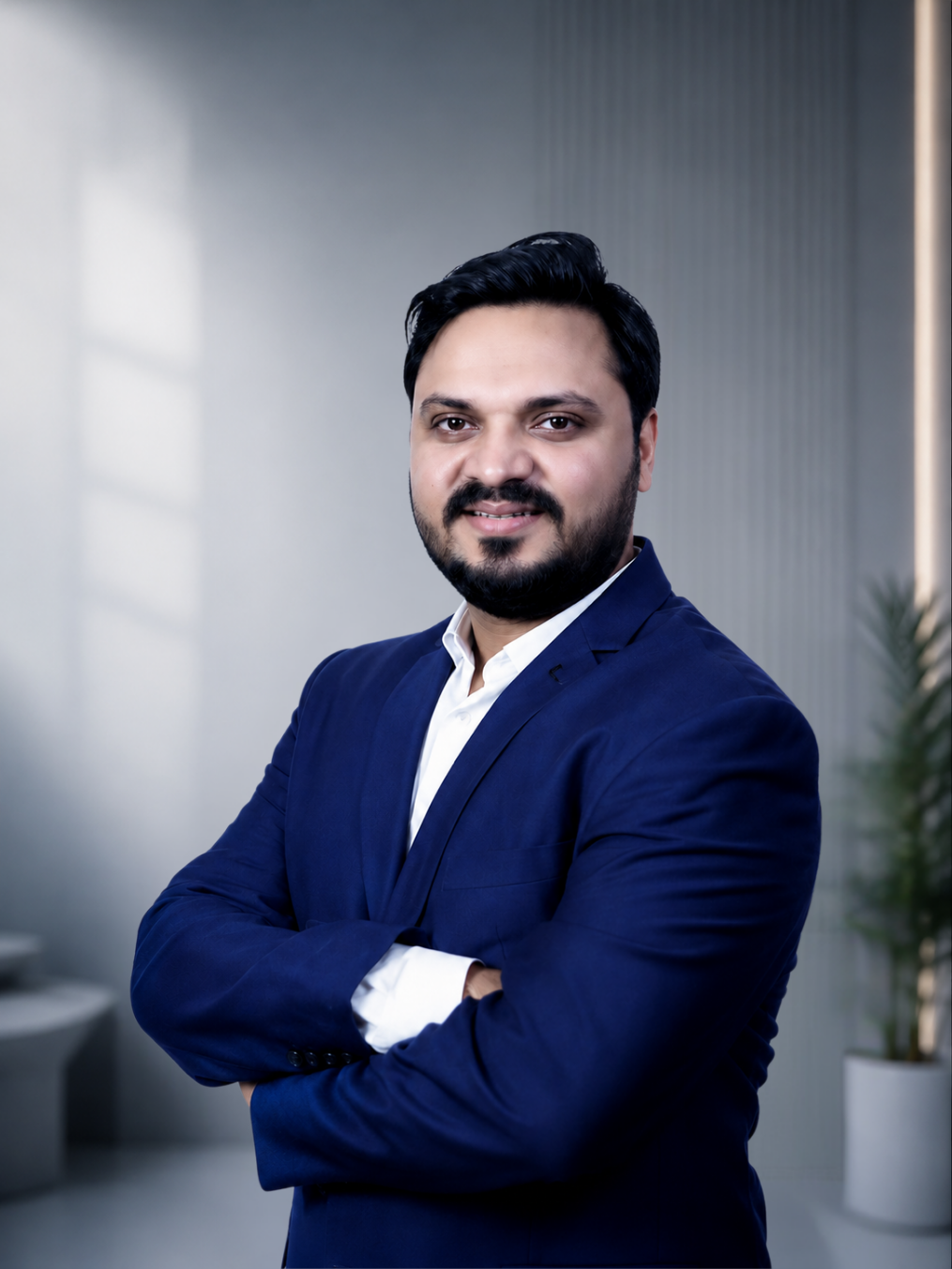
Prof. Krishna N. Sharma brings global teaching authority, integrative healthcare insight and practical education experience across physiotherapy, holistic care, complementary therapy and mental health learning.
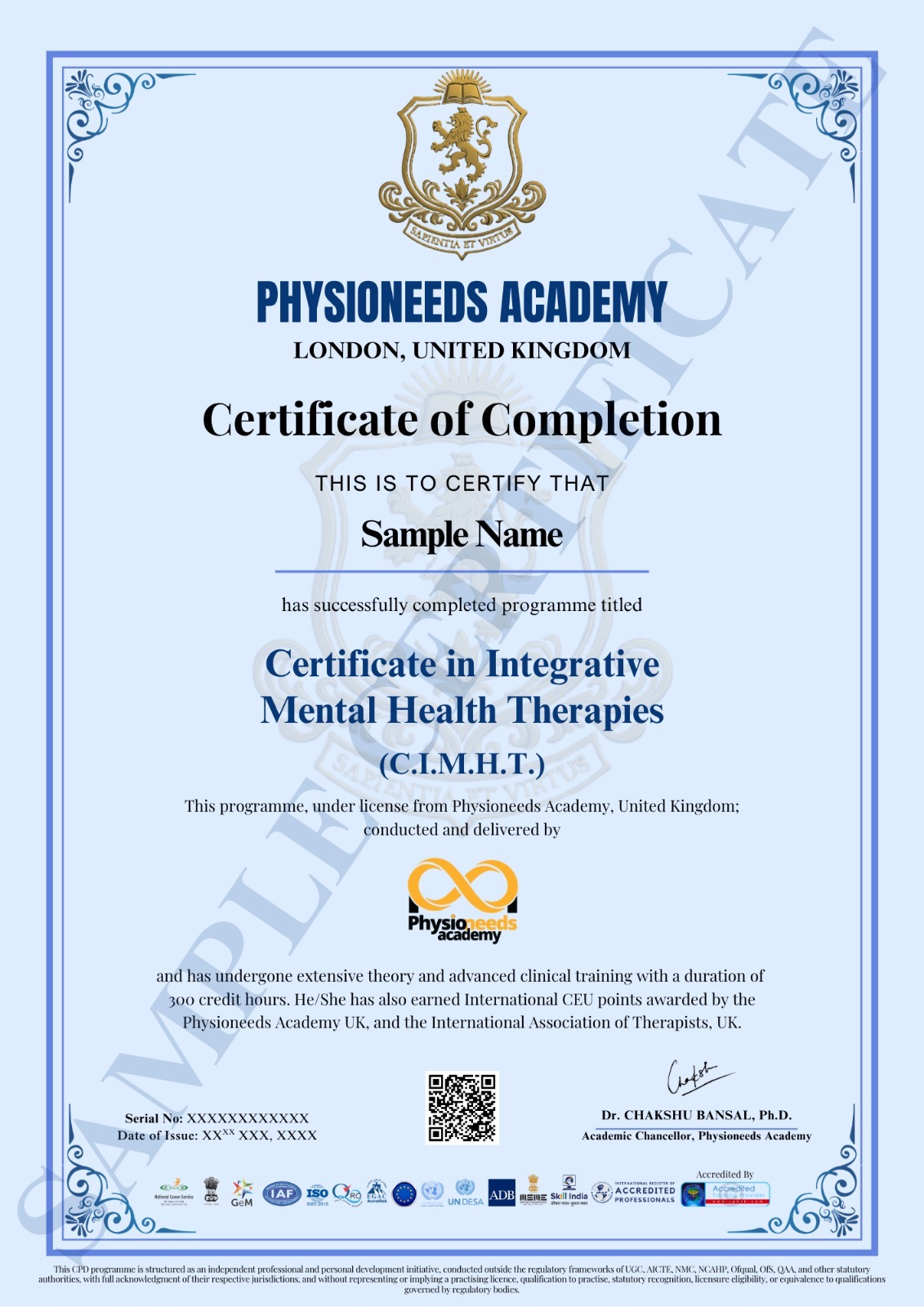
The brochure includes a sample certificate page for course completion. Final certificate wording and design should follow the live course and institutional settings at the time of completion.
Step-by-step learning across acupressure, Sujok, reflexology, EFT, yoga, meditation, aromatherapy and holistic mental wellness.
Structured mental health coverage across the 30 conditions listed in the brochure.
Practical demonstrations, real-world applications and clinical learning for integrative mental health care.
Lifetime access to material so learners can revisit and revise core integrative therapy concepts.
Complementary and alternative medicine-focused mental health learning for healthcare and wellness professionals.
Course page highlights global recognition and professionals learning from 190+ countries.
Multiple payment options available. Choose full payment or EMI payment in the secure plan popup.
Learners value the course for its practical structure, holistic therapy clarity and confidence-building approach to integrative mental health care.
Earlier I only focused on conventional care. Now I can integrate complementary therapies for emotional wellness, stress reduction and patient support.
— Nidhi SinghThe integrative therapy explanations, practical demos and case-based approach made the course useful for clinical and wellness practice.
— Varun GoelCIMHT gave me better confidence, stronger positioning and clearer ways to support clients through holistic, mind-body and complementary care.
— Khushi VermaThe course is ideal for healthcare professionals, therapists, rehabilitation professionals and wellness practitioners who want to integrate holistic therapies into mental health care.
Integrative Mental Health Therapies combine traditional mental health approaches with complementary practices to support emotional wellness, resilience, coping skills and holistic mental well-being.
Yes. The source course page states learners get lifetime access to course material so they can revisit and revise the concepts.
The course page highlights community support, expert guidance and Q&A support to help learners during the learning journey.
The course page explains major integrative therapy categories such as mind-body medicine, biologically based practices, body-based practices, energy therapies and whole medical systems.
CIMHT focuses on 20+ integrative therapies, emotional wellness, personalized applications, patient education, lifestyle support and holistic mental health management.
Build holistic mental health confidence, learn under Prof. Krishna N. Sharma and strengthen your professional learning profile for clinics, rehab centers, wellness centers and private practice.