There are no items in your cart
Add More
Add More
| Item Details | Price | ||
|---|---|---|---|

Learn Kinesiology Taping + Rigid Taping + Semi-Elastic Taping + Sports Taping in one practical certification course.
Learn taping with clinical reasoning, pre-recorded practical demo videos, lifetime access, certificate, and support from Dr. Chakshu ma’am.
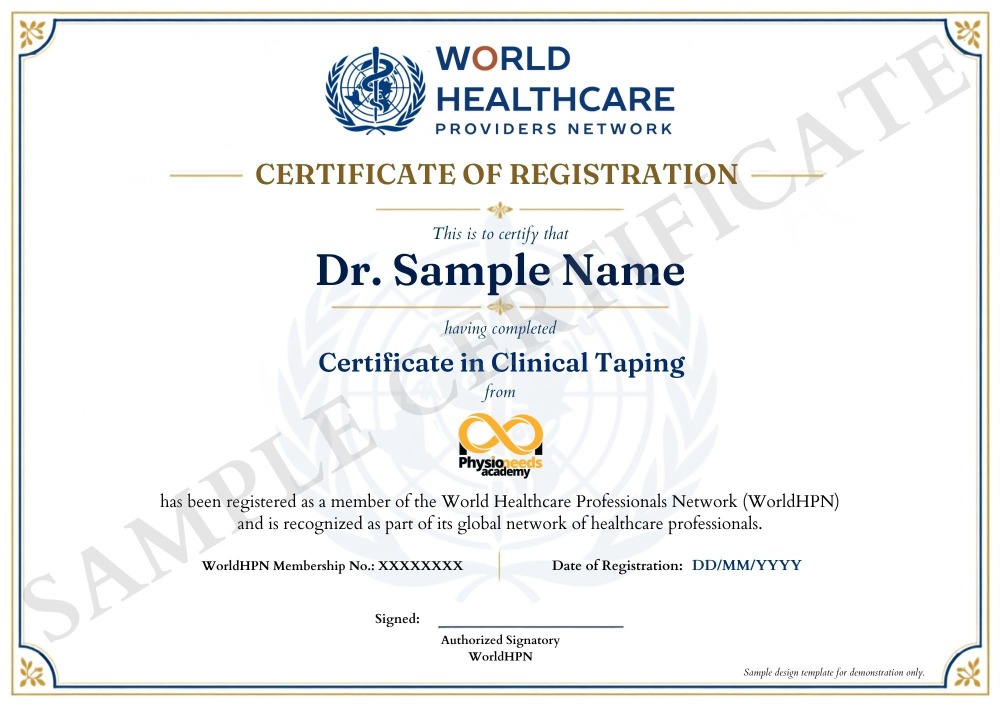
Explore the organisations, registrations and professional recognition associated with Physioneeds Academy.
Watching random taping videos is not enough. In real practice, you need to know the right tape, right tension, right direction and right clinical purpose.
Instead of buying separate short courses for kinesiology taping, rigid taping, semi-elastic taping and sports taping, you get a complete clinical taping system at the current country-wise fee.
This is not a basic “learn one tape pattern” course. It is designed to build complete taping confidence.
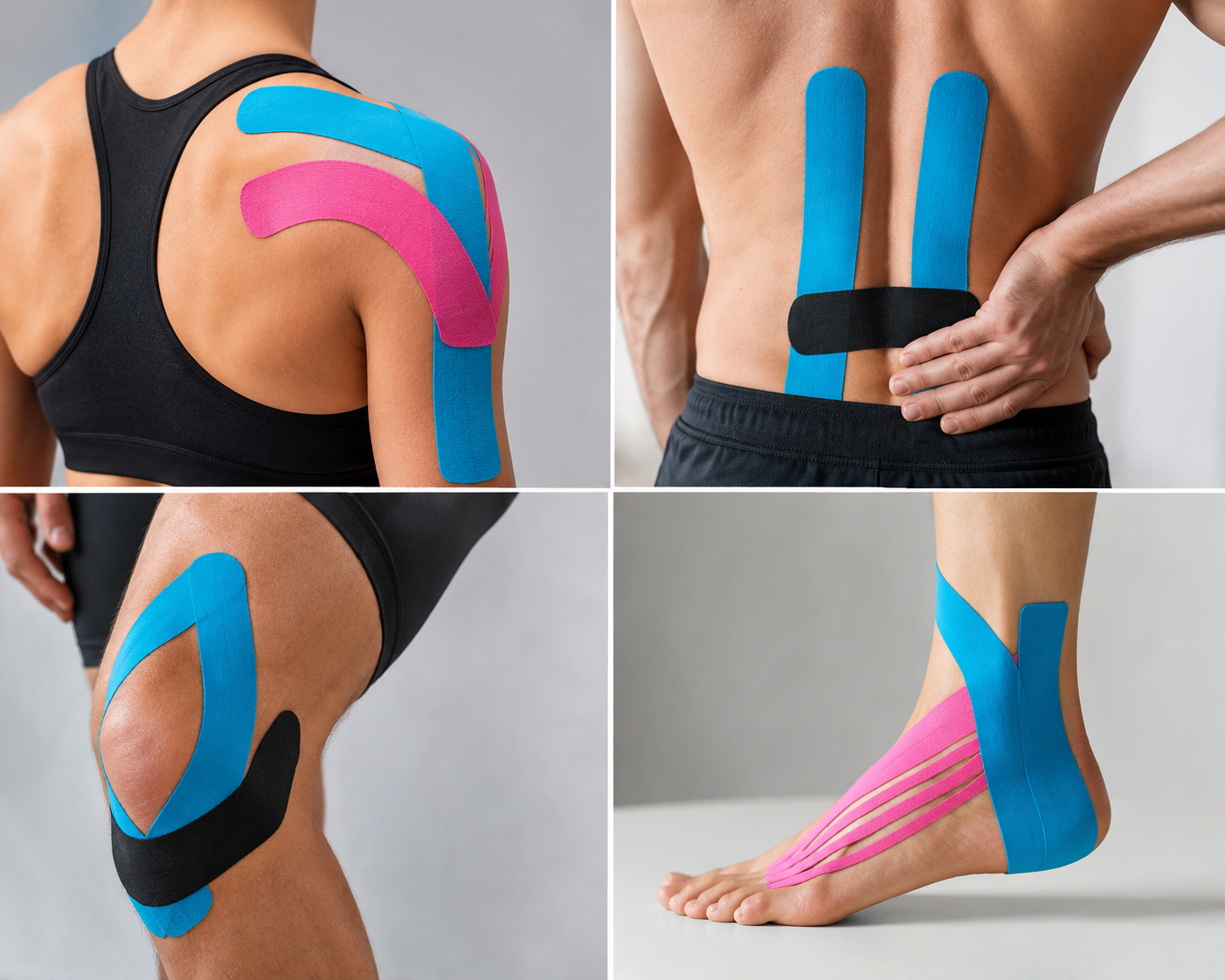
For pain relief, muscle support, fascia correction and movement assistance.
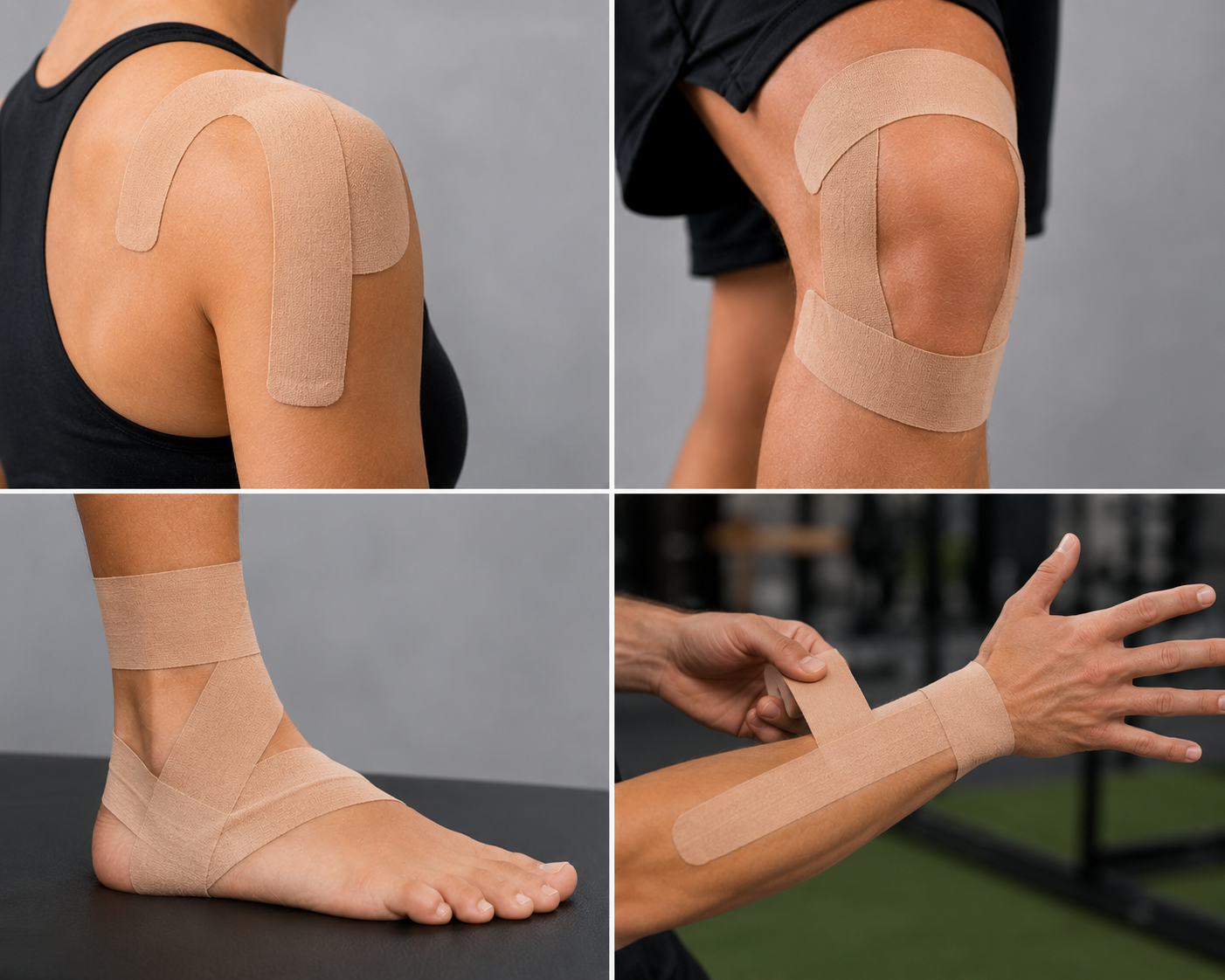
Learn This →For cases needing both movement and support during functional rehab.
Learn This →The biggest advantage of this course is that you get pre-recorded practical demo videos. You can learn at your own pace and revise the technique whenever you need.
Add your best clinical taping practical demo here.
Add another technique-based taping demo here.
Use this space to show real course learning experience.
One payment. Lifetime access. Practical demos. Certificate. Mentor support.
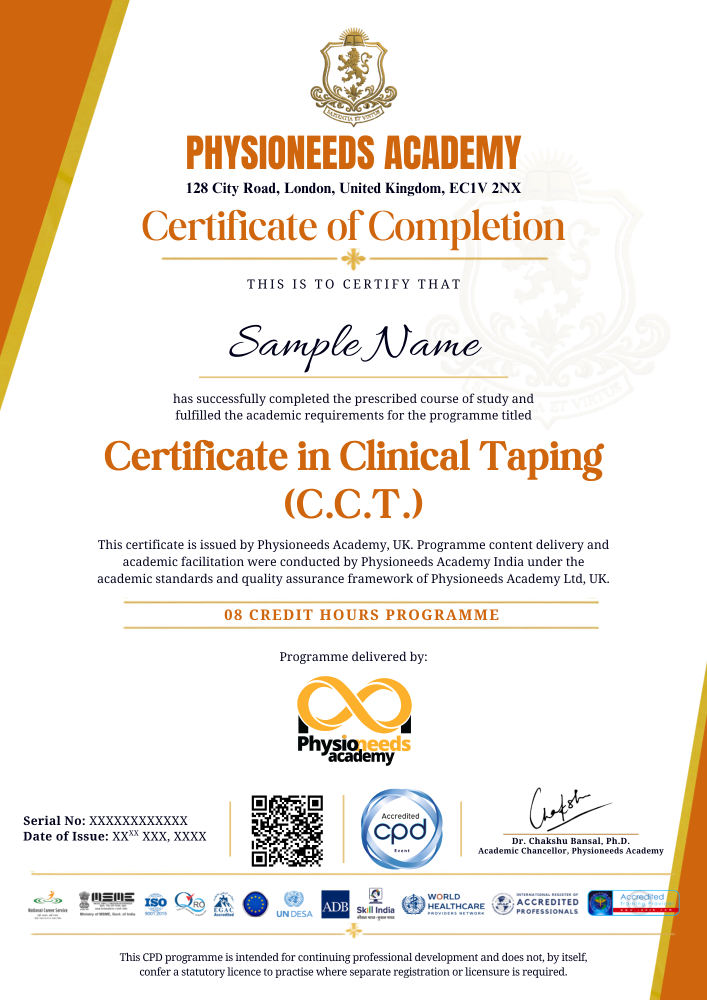
This section is made specially to show the course certificate, hard copy, packaging or dispatch video. Replace the placeholder with your real certificate/hard copy video.
Show learners exactly what they will receive after completing the course.
Use this to create trust and make the certification feel premium.
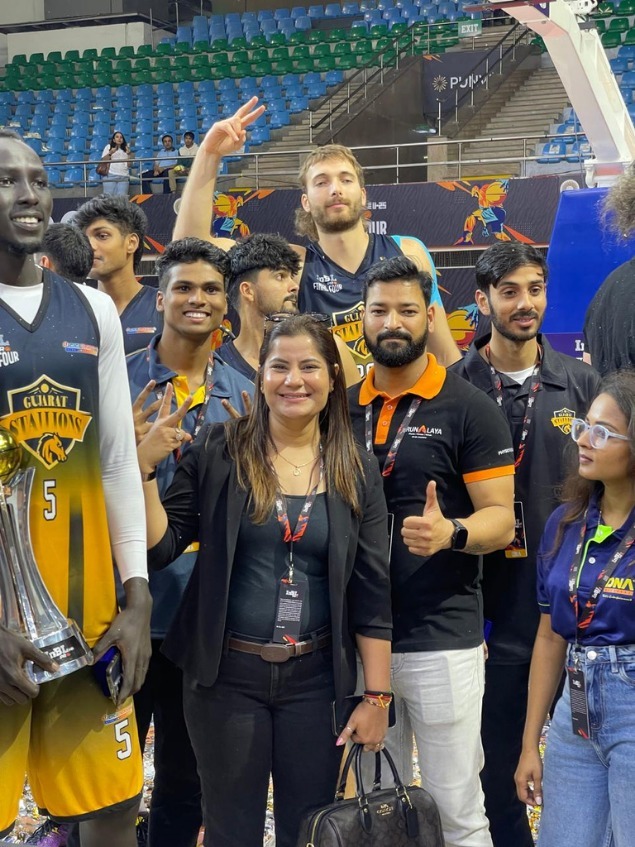
Dr. Chakshu Bansal brings a practical, clinical and application-based teaching style so learners understand not just how to apply tape, but why and when to apply it.
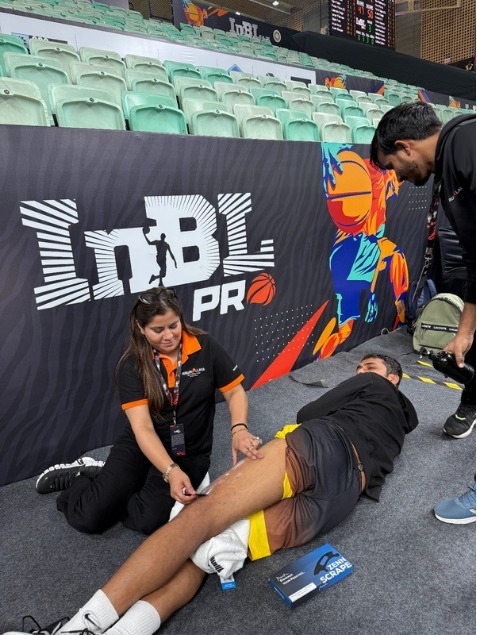
Real-world sports physiotherapy exposure in a professional basketball environment.
Introduction to clinical taping, skin and fascia mechanics, basic application rules and precautions.
Kinesiology tapes, rigid tapes, semi-elastic tapes and sports tapes.
Physiological taping, biomechanical taping, pain modulation and movement support.
Muscle facilitation, inhibition, tendon support and ligament protection.
Shoulder, knee, ankle, spine, pain reduction, stabilization and functional support.
Special population taping, sports injury taping and rehab-based application.
Postural alignment, biomechanical correction, movement support and pattern optimization.
Multi-layer taping, advanced applications and complex injury management.
Clinical case demonstrations, taping selection and treatment planning strategies.
This is why the course feels like a no-brainer purchase.
The Certification in Clinical Taping (CCT) is a comprehensive, multi-system taping certification from Physioneeds Academy that teaches four taping systems in one course — Kinesiology Taping, Rigid Taping, Semi-Elastic Taping and Sports Taping — all with clinical reasoning. Instead of learning one tape pattern, you learn the right tape, the right tension, the right direction and the right clinical purpose across systems, with practical demo videos and lifetime access. On completion you earn the CCT suffix. (This course is catalogued in some listings as “Tapedia – Encyclopedia of Taping”; the live programme is titled Certification in Clinical Taping.)
CCT is built for movement and rehabilitation practitioners: physiotherapists, sports therapists, manual therapists and healthcare practitioners, as well as students and clinic owners who want confident, multi-system taping skills. It suits anyone who wants to move beyond a single tape type and use kinesiology, rigid, semi-elastic and sports taping with clinical reasoning. If you are searching for a complete clinical taping certification, CCT is designed for exactly that.
Yes. CCT is open to physiotherapists, sports therapists, manual therapists, healthcare practitioners, students and clinic owners. It builds from clinical taping foundations and skin-and-fascia mechanics to all four taping systems and case-based application, so both newer and experienced practitioners can follow it. Each professional should apply the techniques within their own scope of practice, training and local regulations.
Yes. CCT is one of the most complete clinical taping certifications available because it teaches four taping systems — kinesiology, rigid, semi-elastic and sports — in a single course, with clinical reasoning, body-region applications, special-population and advanced taping, and case demonstrations. Instead of buying separate short courses for each tape type, you get a complete clinical taping system in one certification, plus the CCT suffix and lifetime access.
CCT's difference is that it is a multi-system umbrella: four taping systems in one course, taught with clinical reasoning. Many courses teach one tape pattern with no logic; CCT teaches when, why and how to use kinesiology, rigid, semi-elastic and sports taping — the right tape, tension, direction and clinical purpose for each case. You learn to choose between systems and reason through real presentations, not just copy a pattern.
CCT stands for Certification in Clinical Taping, and after successful completion you may use the CCT suffix after your name as per Physioneeds Academy guidelines. The certification is globally recognised and trusted by professionals worldwide.
No — CCT is a professional development and skill-certification programme, not a university degree, statutory qualification or licence to practise. It is designed to strengthen the taping and rehabilitation skills of practitioners across physiotherapy, sports therapy and manual therapy. Every professional should work within their own scope of practice, training and local regulations; CCT adds multi-system clinical taping competence on top of that foundation.
CCT teaches four complete taping systems in one course, each with clinical reasoning for when and why to use it:
You learn each system and how to choose between them for each presentation.
Yes. CCT includes Kinesiology Taping — elastic taping for pain relief, muscle support, fascia correction and movement assistance. You learn its application and clinical use as one of the four systems. (For a dedicated deep-dive with 130+ kinesiology techniques, Physioneeds Academy also offers the Certification in Kinesiology Taping, CKT.)
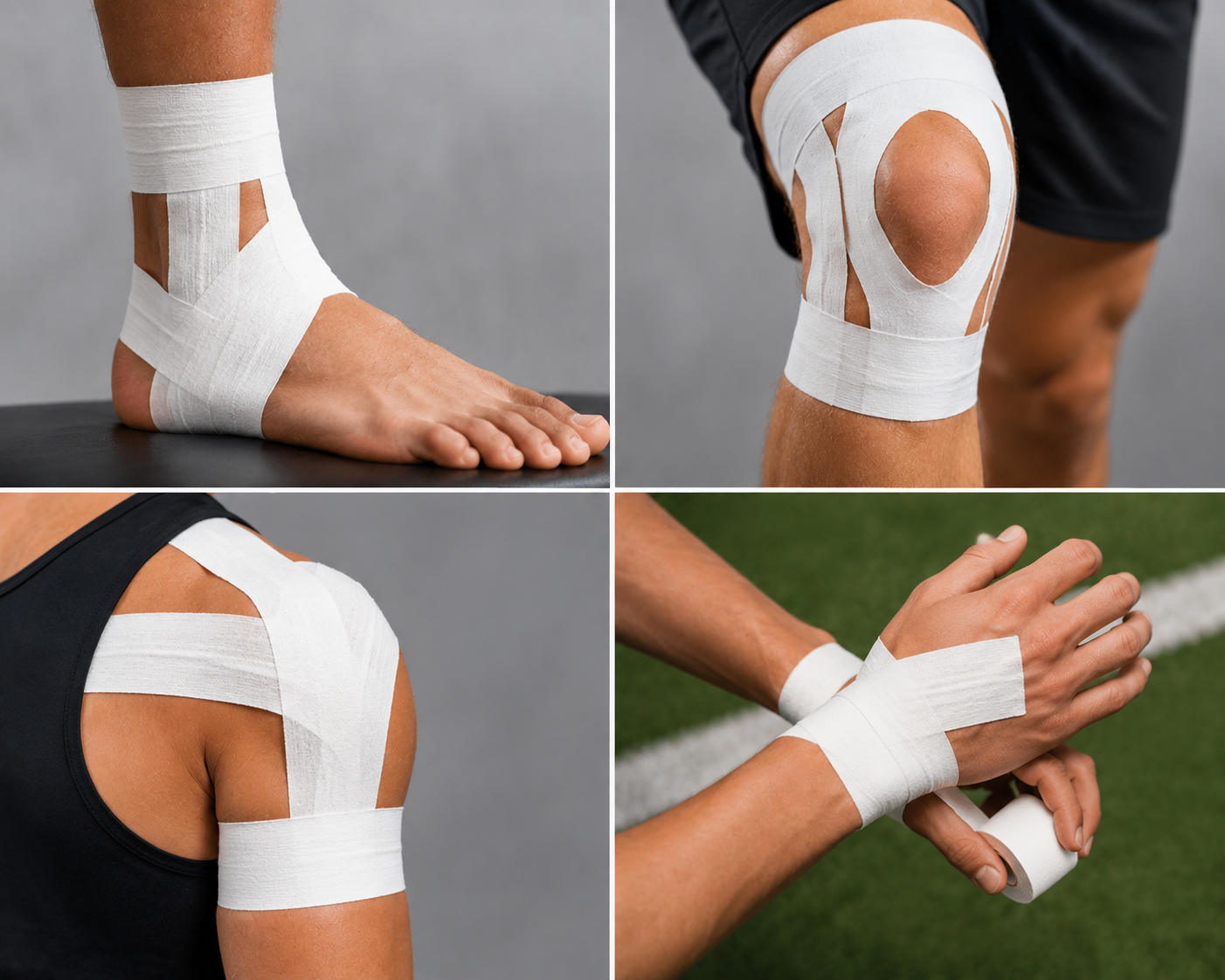
Yes. CCT teaches Rigid Taping — non-elastic taping for ligament protection, joint stability and sports injury prevention. You learn how and when to use rigid tape to restrict unwanted movement and protect vulnerable joints, distinct from elastic taping.
Yes. CCT teaches Semi-Elastic Taping — for cases that need both movement and support during functional rehabilitation. You learn where semi-elastic tape fits between the flexibility of kinesiology tape and the rigidity of rigid tape, giving you a middle-ground option for functional cases.
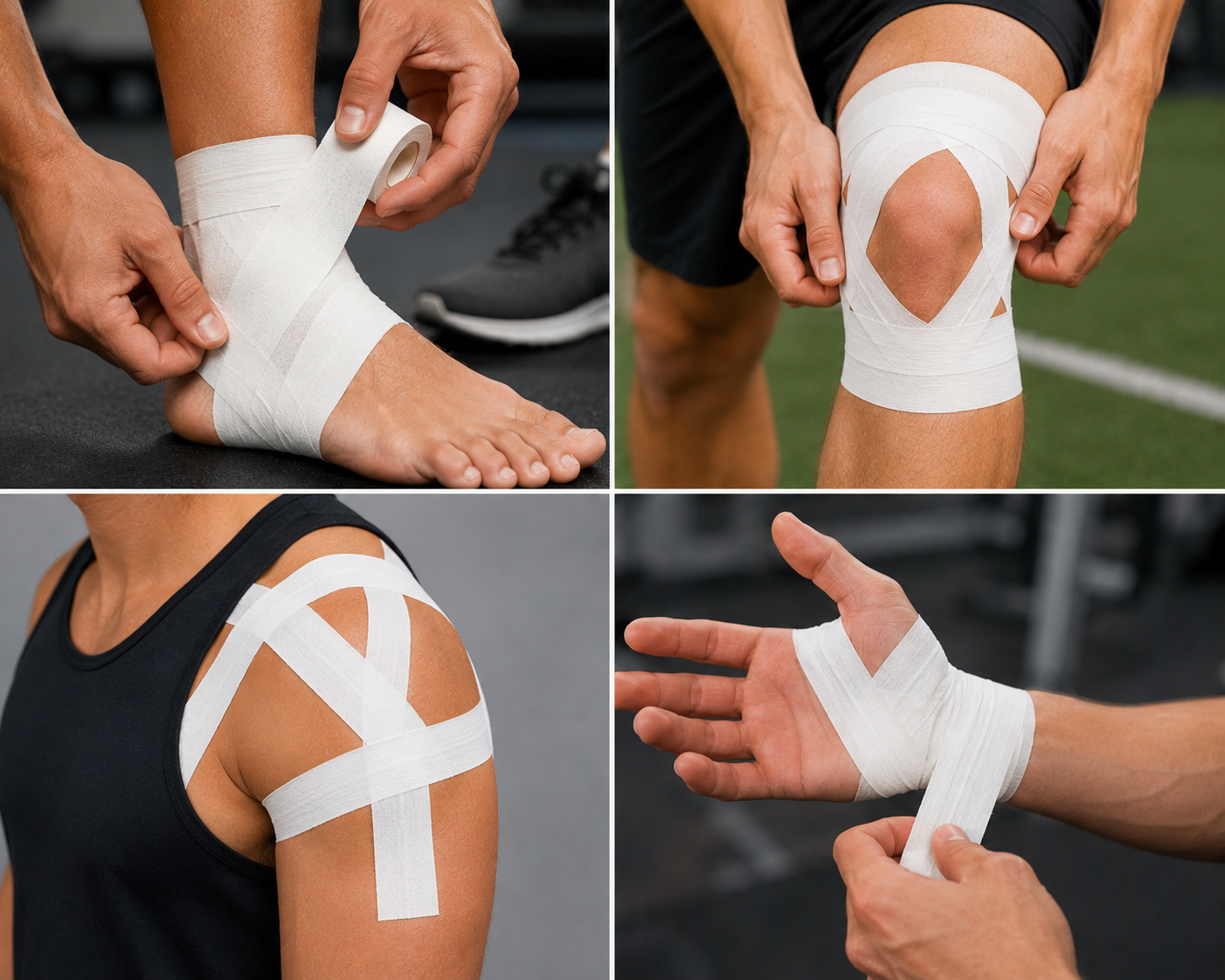
Yes. CCT teaches Sports Taping — for athletes, on-field support and return-to-play, including ankle, knee and shoulder taping. You learn quick, effective sports taping for injury support and prevention in active and on-field settings.
CCT teaches you to choose the right taping system for each case — kinesiology for pain, fascia and movement assistance; rigid for stability and protection; semi-elastic for functional support with movement; and sports taping for on-field and return-to-play. Rather than defaulting to one tape, you learn to match the system to the clinical goal, which is the core skill of clinical taping.
Yes — clinical reasoning is the backbone of CCT. Every technique is taught with the reasoning behind it: the right tape, the right tension, the right direction and the right clinical purpose. This when-why-how approach is what turns taping from copying videos into confident, reasoned clinical practice.
Yes. CCT begins with clinical taping foundations — skin and fascia mechanics, basic application rules, tension and direction, and precautions — so every technique across the four systems rests on a sound understanding of how tape interacts with tissue.
Yes. CCT teaches muscle facilitation and inhibition — using taping to support or downregulate muscle activity as clinically appropriate. Understanding facilitation and inhibition lets you apply taping purposefully for movement and muscle-function goals.
Yes. CCT teaches tendon support and ligament protection, drawing especially on rigid and sports taping to stabilise and protect vulnerable structures. You learn to protect and support tendons and ligaments as part of injury management and prevention.
CCT covers taping for the major body regions — shoulder, knee, ankle and spine — alongside pain reduction, stabilisation and functional support. You learn region-specific applications across the four taping systems, so you can tape confidently wherever the presentation requires.
Yes. CCT includes postural alignment and biomechanical correction — using taping to support better posture, movement patterns and pattern optimisation. You learn to integrate taping into postural and movement-correction plans.
Yes. CCT teaches multi-layer taping, advanced applications and complex injury management — combining systems and layers for more demanding presentations. This advanced content lets you handle complex cases beyond single-technique taping.
Yes. CCT includes special-population taping and rehab-based application, teaching you to adapt taping safely for different patient groups. You learn to apply the systems appropriately across a range of populations, within your scope.
Yes. CCT teaches pain modulation and movement support through taping — helping address pain (including back pain and muscle pain) and support movement as an adjunct to rehabilitation. As with all taping, the course frames these as supportive benefits applied with assessment and integrated with care.
Yes. CCT's Sports Taping system covers sports injury taping and on-field support — quick, effective taping for ankle, knee and shoulder in athletic and on-field settings. You learn practical sports taping for injury support and prevention where speed and reliability matter.
Yes. CCT teaches return-to-play taping, using sports and rigid taping to support athletes returning to activity safely. You learn to use taping as part of a reasoned return-to-play plan alongside rehabilitation.
CCT applies clinical taping across pain, muscle stiffness, joint instability, sports injuries, postural dysfunction and functional rehabilitation — spanning shoulder, knee, ankle and spine. With four taping systems and clinical reasoning, you can address a wide range of presentations, within your scope of practice.
Yes. CCT teaches you to integrate taping into a wider rehabilitation plan — using it to support pain relief, stability and movement while exercise and rehabilitation drive the underlying change. You learn to use taping as one purposeful adjunct across systems, not a stand-alone treatment.
Yes. CCT includes clinical case demonstrations, taping selection and treatment-planning strategies, so you can practise choosing the right system and technique for real presentations. This case-based design bridges theory and confident multi-system clinical taping.
CCT is honest about the evidence: taping is best used as an adjunct to assessment-led rehabilitation. Depending on the taping system, evidence suggests potential support for pain, stability, proprioception, movement confidence or joint protection in selected cases, but results depend on correct patient selection, application technique and integration with exercise-based care. The course therefore teaches taping as a supportive, reasoned tool within rehabilitation — not a stand-alone cure — helping you set realistic expectations.
CCT is a 1-month programme carrying 8 CPD Hours. It is structured from clinical taping foundations — skin and fascia mechanics, application rules and precautions — through the four tape types (kinesiology, rigid, semi-elastic, sports), physiological and biomechanical taping and pain modulation, muscle facilitation and inhibition, tendon and ligament work, body-region applications, special populations, postural and biomechanical correction, multi-layer advanced taping, and clinical case demonstrations. It is a clear path from foundations to complete, multi-system clinical taping.
Yes. CCT is delivered online with pre-recorded practical demo videos, so you can watch, pause, practise and repeat anytime, and it includes lifetime access so you can revise techniques whenever you need. This watch-and-revise format is ideal for building and maintaining hands-on taping skills.
Yes. CCT is built around practical demo videos for each taping system and technique, so you can follow the hands-on skills in detail. For learners who want supervised, in-person practice, Physioneeds Academy conducts practical workshops at Arunalaya Healthcare, Patel Nagar, New Delhi.
CCT is taught by Dr. Chakshu Bansal, who brings a practical, clinical and application-based teaching style — so you understand not just how to apply tape, but why and when. She is a globally recognised physiotherapist and educator, Founder of Physioneeds Academy and of Tapedia, the world's first encyclopedia of taping techniques, and co-developer of KinetiKinetic Manual Therapy (KKMT), with academic leadership from Prof. (Dr.) Krishna N. Sharma. Learning clinical taping from the founder of a dedicated taping encyclopedia is a distinctive strength of this course.
No advanced prior specialisation is required — CCT is open to physiotherapists, sports therapists, manual therapists, healthcare practitioners, students and clinic owners, and builds from clinical taping foundations to all four systems and advanced applications. Each professional applies the skills within their own scope, training and local regulations.
Yes. CCT includes pre-recorded practical demo videos and clinical case demonstrations across the four taping systems, so you can see each technique performed and understand how to apply it to real presentations. This demo-led, case-based design supports your positioning as a trained clinical taping practitioner.
On successful completion you receive the Certification in Clinical Taping, issued by Physioneeds Academy, London, UK and delivered by Physioneeds Academy, India (Ashira Innovations Pvt Ltd), with the right to use the CCT suffix as per academy guidelines. (This programme is catalogued in some listings as “Tapedia – Encyclopedia of Taping”; the live course and certificate are Certification in Clinical Taping / CCT.) The certification is globally recognised, backed by the academy's international accreditation (IAOTH UK and IRAP).
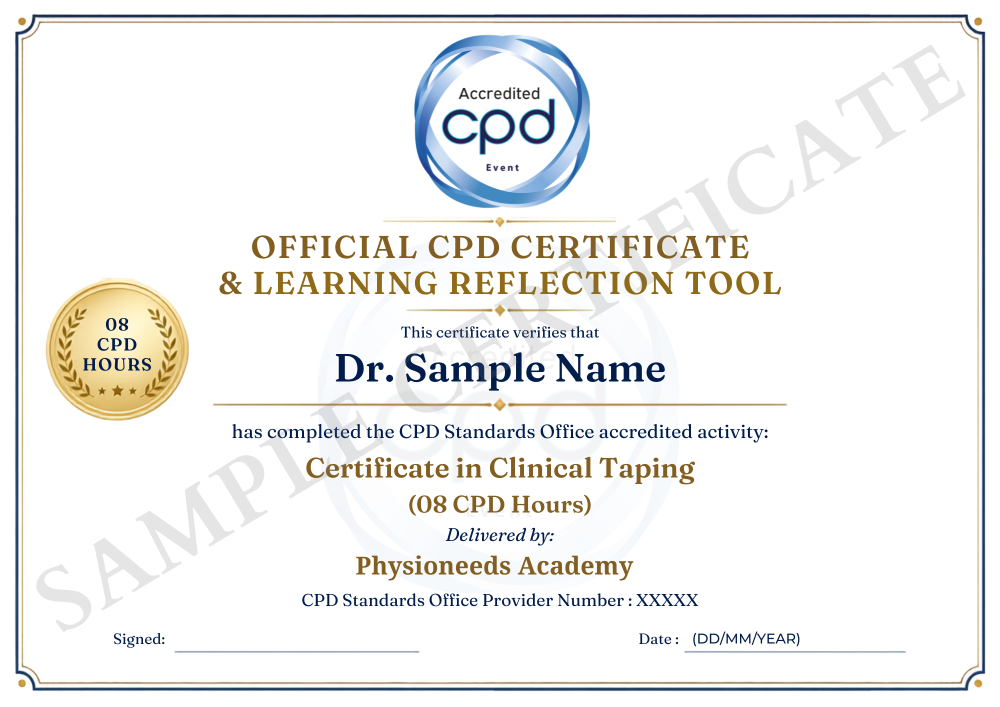
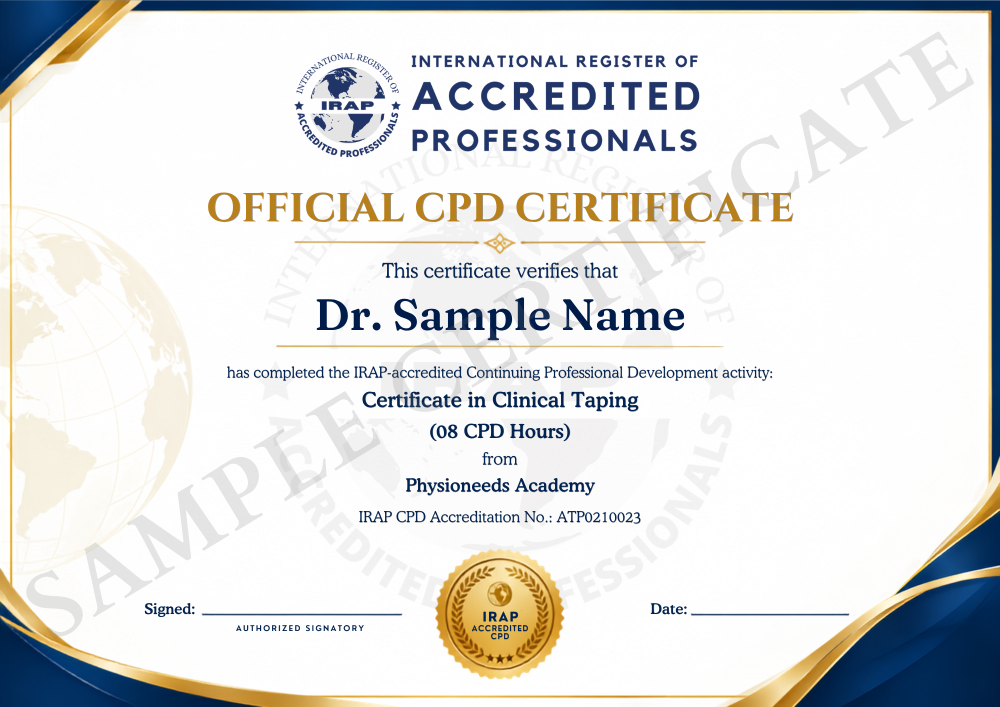
Yes — the Certification in Clinical Taping (CCT) carries 8 CPD Hours, supported by Physioneeds Academy's international accreditation (IAOTH UK and IRAP). It lets you demonstrate structured continuing professional development in clinical taping.
CCT is a one-time payment with lifetime access, and where available offers EMI / installment options through a secure checkout. For the current, country-wise fee and any active offer, check the course page or speak to the Physioneeds Academy team. Getting four taping systems in one certification makes it a value-packed way to upgrade your clinical skillset.
You can enrol directly on the CCT course page at https://www.e-physioneeds.com by choosing full payment or an EMI plan in the secure checkout, or speak to a counsellor first on call or WhatsApp at +91 99909 93318, +91 99901 00373 or +91 88002 20066. After enrolling, you get the four taping systems, practical demo videos, clinical case applications, mentor support and lifetime access to the content.
Choose CCT (Certification in Clinical Taping) if you want the multi-system umbrella — four taping systems in one course (kinesiology, rigid, semi-elastic and sports taping) with clinical reasoning across all of them. Choose CKT (Certification in Kinesiology Taping) if you want to master kinesiology taping in depth — 130+ techniques within that single elastic-tape system. Many practitioners take CCT for multi-system breadth, then CKT to go deep on kinesiology taping (or the reverse). A counsellor can help you decide.
CCT is designed to strengthen both your taping results and your professional positioning. By mastering four taping systems with clinical reasoning — kinesiology, rigid, semi-elastic and sports — and by adding the CCT suffix, you can tape confidently across pain, stability, functional rehab and sports settings, and position yourself as a well-rounded clinical taping practitioner for clinics and sports setups. As with any qualification, outcomes depend on how you apply the skills.
Physioneeds Academy is the specialised clinical physiotherapy education brand of Ashira Innovations Pvt Ltd, headquartered in Patel Nagar, New Delhi, offering advanced CPD and certification courses for physiotherapists in India and internationally. Our programmes focus on practical clinical skills, neurodevelopmental techniques and evidence-based therapeutic practice — helping practising physiotherapists specialise, upskill and grow their careers.
Physioneeds Academy courses are designed for BPT and MPT graduates and practising physiotherapists, both in India and internationally. Our Certificate and Fellowship programmes suit physiotherapists who want to specialise further, and some advanced fellowship tracks carry additional eligibility criteria specific to that clinical domain. If you are a physiotherapist looking for accredited online physiotherapy courses after BPT or MPT, you are eligible to enrol.
Yes — Physioneeds Academy's certifications are internationally accredited by IAOTH (International Association of Therapists), UK and IRAP (International Register of Accredited Professionals). This gives your Certificate or Fellowship recognised, accredited professional-development standing as a physiotherapy credential in India and internationally.
Certificates are issued by Physioneeds Academy, London, UK, while the courses are delivered by Physioneeds Academy, India (Ashira Innovations Pvt Ltd). This gives you an internationally issued, IAOTH- and IRAP-accredited physiotherapy certificate backed by India-based clinical teaching and mentorship.
Once you enrol in a Physioneeds Academy course, you get lifetime access to the full online programme. You can log in anytime to watch pre-recorded video lectures, access study material, join case discussions and complete assessments at your own pace — ideal for working physiotherapists who need a flexible, self-paced online physiotherapy course.
Physioneeds Academy courses start as soon as you register, because they are fully online with pre-recorded lectures and study material. There is no waiting for a batch — your course duration begins from the day of registration, so you can start learning immediately.
The set course duration is only the minimum recommended timeline — with lifetime access, you can complete any Physioneeds Academy course at your own pace with no extension fees. This makes it easy for busy physiotherapists to learn around clinical and personal commitments.
Each Physioneeds Academy course includes self-assessment MCQs for every module, which you can attempt multiple times, with no high-pressure final examination at the end. The focus is on practical clinical competence and confident application, not exam stress.
Because Physioneeds Academy courses use self-assessment MCQs, you are given free additional attempts if you don't pass a quiz. The quizzes are there to reinforce your learning, not to penalise you.
A Physioneeds Academy course strengthens your professional credibility and clinical skills, which can lead to improved job opportunities and higher-quality patient care. By deepening your expertise you can confidently manage more complex cases within your area of practice and position yourself as a specialist physiotherapist.
Physioneeds Academy courses are CPD and professional-development programmes that enhance your clinical skills and knowledge — a course completion certificate or fellowship alone does not by itself grant practising eligibility. To understand practice requirements, always check with the relevant state or national physiotherapy council or regulatory authority in your region.
Physioneeds Academy offers a small number of courses for fitness coaches, trainers, doctors and other allied health professionals, but our physiotherapy courses are exclusively for qualified physiotherapists — we don't offer physiotherapy courses to non-physiotherapists. If you're not a physiotherapist, please contact our counsellors to check which courses you may be eligible for.
Yes — this Certification in Clinical Taping (CCT) carries 8 CPD Hours. Physioneeds Academy Certificate and Fellowship programmes carry accredited CPD points supported by the academy's IAOTH (UK) and IRAP accreditation, helping you demonstrate ongoing, structured continuing professional development.
Once you successfully complete your Physioneeds Academy course, our team verifies your completion status, payment status and submitted qualification documents, then issues your certificate in digital format at no extra cost. A hard copy is available on request; for international students, hard-copy certificates attract additional shipping and handling charges, which are communicated in advance.
Physioneeds Academy typically issues your certificate within 7–14 working days once we receive your documents after course completion.
Your documents are required before your Physioneeds Academy certificate is issued. If you didn't submit them during registration, you'll need to submit them before the certificate is issued, or within any grace timeline given by the academy.
For Certificate courses, you submit any one of your marksheet, admission letter or college ID card confirming your physiotherapy qualification. For Fellowship programmes, you submit your degree marksheets, degree certificate, and either a temporary licence (if you are an intern) or a permanent licence (if you have completed your degree).
Clinical observership is optional at Physioneeds Academy and available only for select Fellowship programmes. Even without it, you gain extensive practical knowledge through numerous online case studies, and every video lesson includes a Q&A section where you can interact with faculty, discuss cases and get your questions answered — ensuring a comprehensive learning experience.
Physioneeds Academy's practical workshops and clinical observership are conducted at Arunalaya Healthcare, Patel Nagar, New Delhi — a live physiotherapy practice that keeps the training grounded in real patient cases.
You can enrol in any Physioneeds Academy course at https://www.e-physioneeds.com. To speak with a counsellor first, call or message on WhatsApp at +91 99909 93318, +91 99901 00373 or +91 88002 20066, and the team will guide you to the right course and payment plan.
No — Physioneeds Academy does not offer a Bachelor of Physiotherapy (BPT) or any base physiotherapy degree; we are a post-qualification CPD provider. For a BPT or BSc Physiotherapy degree you'll need a UGC-recognised college or university, and once you're BPT/MPT qualified, our Certificate, Fellowship and PG Diploma programmes help you specialise further.
An MSc Physiotherapy or Master of Physiotherapy (MPT) is a full-time academic postgraduate degree from a university, typically spanning two years with formal semester exams. A Physioneeds Academy Fellowship is a shorter, skill- and case-based CPD programme focused on one clinical domain, built for working physiotherapists who want focused specialisation without pausing clinical practice.
Yes — Physioneeds Academy offers a PG Diploma in Orthopaedic Physiotherapy and Rehabilitation and a PG Diploma in Orthopaedic Manual Therapy, both from a UGC-recognised university, exclusively for physiotherapists. Alongside these university-affiliated diplomas, we also offer Certificate and Fellowship programmes across other clinical specialties for physiotherapists who want a shorter, more focused route.
Physioneeds Academy's PG Diploma programmes (Orthopaedic Physiotherapy and Rehabilitation; Orthopaedic Manual Therapy) are university-affiliated academic qualifications from a UGC-recognised university, with formal assessment and university certification. A Fellowship, by contrast, is a Physioneeds Academy CPD credential — a skill- and case-based specialty programme built around practical clinical competence, without university affiliation. Choose the PG Diploma when you want a UGC-recognised academic qualification, and a Fellowship when you want faster, practice-oriented specialisation in a specific clinical domain.
A specialty fellowship after BPT can strengthen your clinical credibility, widen the range of conditions and cases you can confidently manage, and help you position as a specialist within your existing practice. Actual income outcomes depend on your practice setting, location and patient base — Physioneeds Academy does not guarantee any specific salary or income increase.
Start with your existing patient load and clinical interest — the specialty you see the most cases in, or find most engaging, usually gives the fastest return on a fellowship. Physioneeds Academy offers focused programmes across Neurological Physiotherapy, Orthopaedic & Musculoskeletal Rehabilitation, Paediatric Physiotherapy, Cardiopulmonary & ICU Rehabilitation, Sports Physiotherapy, Geriatric Rehabilitation, Women's Health & Pelvic Floor Physiotherapy, Pain Management & Manual Therapy, Sensory Integration Therapy, and Post-Surgical & Trauma Rehabilitation — and if you're unsure, our academic counsellors can walk you through the options at no charge.
It depends on your goal. An MBA in Hospital Management suits physiotherapists moving into hospital administration or healthcare management roles, while a clinical specialisation suits physiotherapists who want to keep treating patients but build deeper, differentiated clinical expertise. Physioneeds Academy's clinical Certificate, Fellowship and PG Diploma programmes are built for that second path.
Yes — Physioneeds Academy enrols physiotherapists internationally, across 191 countries, and its IAOTH (UK) and IRAP accreditation is recognised internationally as a professional-development credential. As with any CPD programme, it does not itself grant a practising licence, so international applicants should confirm licensing requirements with the physiotherapy regulator in the country where they intend to practise.
Yes — Physioneeds Academy offers Zero-Cost EMI / instalment options on course fees. Please speak with our counsellors for the exact plan available on your selected course.
Physioneeds Academy's full refund and cancellation terms are published on the Cancellation and Refund Policy page at https://www.e-physioneeds.com/refundpolicy. We recommend reviewing it before enrolment.
Yes — you can enrol in multiple Physioneeds Academy Certificate or Fellowship courses simultaneously, and each runs on its own lifetime-access timeline. Many physiotherapists combine a clinical specialisation such as Sports Physiotherapy with a complementary skill course like Manual Therapy to broaden their practice.
Physioneeds Academy combines internationally accredited certification (IAOTH UK, IRAP) with hands-on practical workshops — not just online video content — across ten focused clinical domains, from neurodevelopmental technique to paediatric and sports physiotherapy. It is also connected to a live clinical practice, Arunalaya Healthcare, which keeps the curriculum grounded in real patient cases.
Have questions before enrolling? Request a callback and our team will guide you.
Call / WhatsApp:
+91-8800220066 | +91-9990100373
Get certified in Clinical Taping with practical demo videos, lifetime access, support and all major taping types in one course.