There are no items in your cart
Add More
Add More
| Item Details | Price | ||
|---|---|---|---|

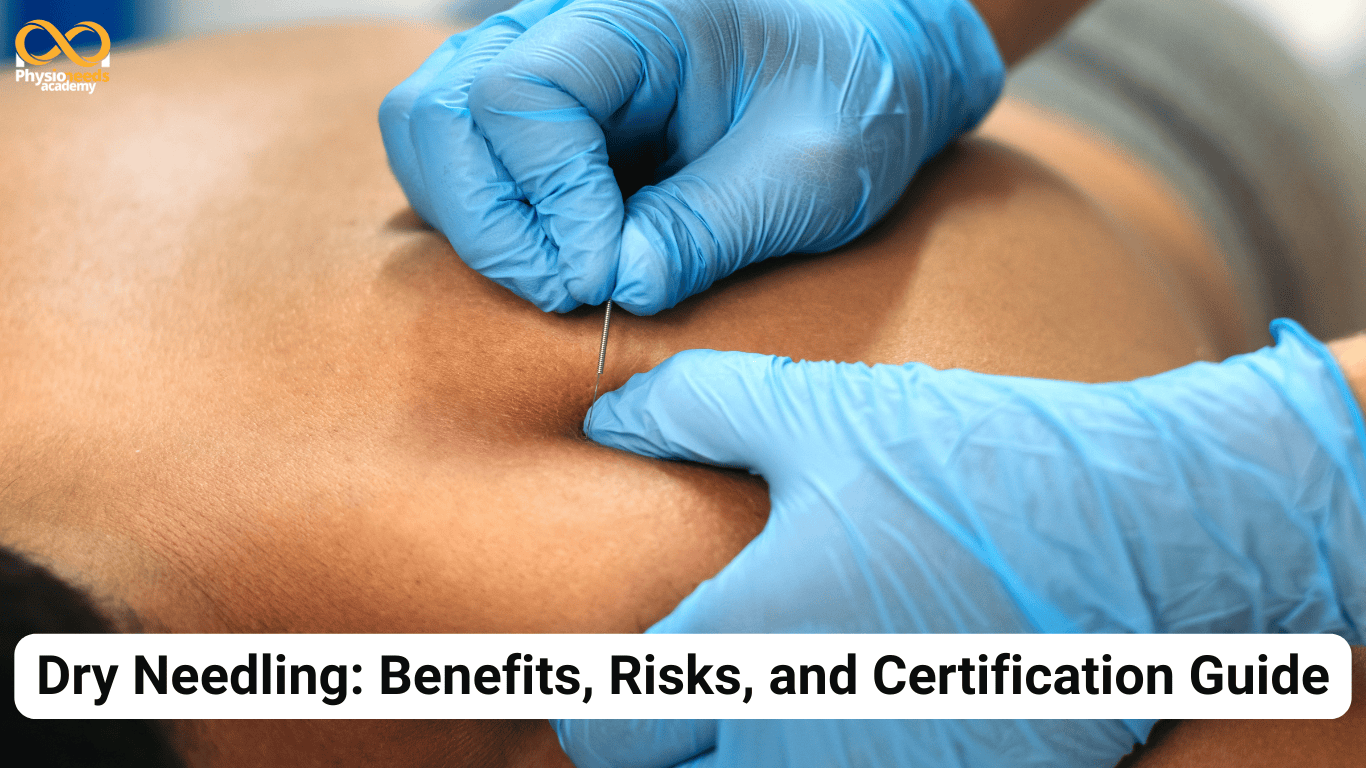
Dry needling has become one of the most in-demand treatment modalities in modern physiotherapy and sports rehabilitation. Whether you’re a clinician looking to improve patient outcomes or a student exploring advanced manual therapy techniques, understanding how dry needling works—and how to get certified—can shape your professional journey.
In this in-depth guide by Physioneeds Academy, you’ll learn the science behind dry needling, treatment benefits, potential risks, and the step-by-step path to professional certification.
Dry needling is a therapeutic technique in which a trained practitioner inserts fine, sterile, single-use needles (similar to acupuncture needles) into specific points in muscles known as myofascial trigger points.
These triggers are tight knots—often formed due to injury, strain, poor posture, or overuse—that cause local or referred pain.
Unlike acupuncture, which is rooted in Traditional Chinese Medicine and focuses on restoring energy flow (“Qi”), dry needling is based on musculoskeletal anatomy, neurophysiology, and pain science. The primary aim is to deactivate trigger points, reduce neuromuscular tension, and restore function.
When a needle penetrates a trigger point, several therapeutic responses occur:
1. Mechanical Disruption of Muscle Knots: The needle stimulates a “local twitch response,” which helps release tight bands of muscle fibers, restoring normal tone and elasticity.
2. Neurological Effects: The needle stimulates sensory receptors in the muscle.
This sends messages to the spinal cord and brain, reducing pain perception and improving movement patterns.
3. Circulatory Benefits: Needling increases blood flow to the area, accelerating tissue repair, reducing inflammation, and enhancing oxygen delivery to the muscle.
Dry needling provides targeted and often rapid relief from muscular dysfunction.
Below are the most recognized benefits in physiotherapy and athletic rehab settings:
✔️Pain Reduction
Effective for neck pain, lower back pain, shoulder impingement, tennis elbow, headaches, and sports-related muscle tension.
✔️Improved Range of Motion
Releases muscle tightness and facilitates movement in restricted joints—especially helpful in post-surgical rehab and chronic mobility limitations.
✔️Boosts Athletic Recovery
Athletes report faster recovery after intense training due to reduced muscle tension and improved circulation.
✔️Supports Neuromuscular Re-education
Helps muscles “reset,” improving motor control and reducing compensatory movement patterns.
✔️Adjunct Treatment
Dry needling enhances the effectiveness of other treatments including:
Dry needling is not a standalone cure—it is most effective when integrated into a structured physiotherapy plan.
1. Superficial Dry Needling
Needle insertion up to 5–10 mm into muscle tissue.
Used for highly sensitive areas or patients new to treatment.
2. Deep Dry Needling
Targets deeper trigger points and muscle fibers.
Requires advanced training and stronger anatomical understanding.
3. Trigger Point Dry Needling
Directly stimulates palpable knots.
Often produces twitch response and fast pain relief.
4. Electrical Dry Needling
Involves attaching electrodes to the inserted needles to stimulate nerve and muscle pathways.
Effective for chronic tightness, neuropathic pain, and post-operative rehab.
Dry needling is generally safe when performed by certified professionals, but there are exceptions:
Absolute Contraindications
Like any clinical therapy, dry needling involves risk. When performed by properly trained practitioners, adverse effects are generally mild and temporary.
Common Minor Side Effects
Rare but Serious Risks
Becoming certified ensures safety, confidence, and superior patient outcomes.
Physioneeds Academy offers professional dry needling training designed specifically for physiotherapists, rehab professionals, and healthcare practitioners.
1. Anatomy & Safety Principles
When selecting certification, evaluate: