There are no items in your cart
Add More
Add More
| Item Details | Price | ||
|---|---|---|---|

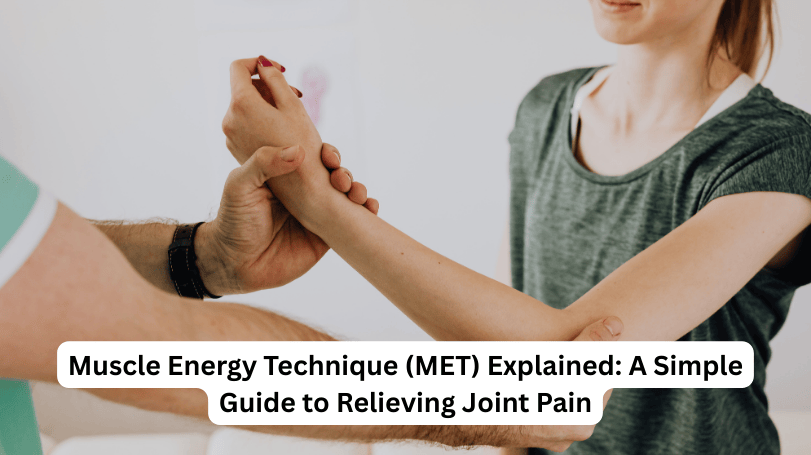
Muscle Energy Technique (MET) Explained: A Simple Guide to Relieving Joint Pain is an easy way to understand how controlled muscle movements can reduce stiffness, improve joint motion, and help people feel better in their daily activities. Joint pain is extremely common today, especially among people who work long hours, play sports, or struggle with posture problems. MET is simple, safe, and widely used by physiotherapists because it helps restore movement without putting stress on the body. Many professionals learn it through a Muscle Energy Technique Course or MET certification, and even beginners find it easy to understand because the method is gentle and practical.
For people searching online, joint pain often leads to high intent comparison queries—like whether to choose physiotherapy, chiropractic care, or home exercises. When a person understands how MET works, it becomes much easier to choose the right service and move confidently toward a booking decision. That is why simple guide content around muscle energy training has become so helpful for students, practitioners, and even everyday people who want a clear, easy solution.
MET is a hands-on technique where the therapist guides the patient to gently contract a muscle while holding a specific position. This light contraction helps release tension, correct joint alignment, and improve range of motion.
It is very different from forceful movements or painful stretches. MET focuses on using the body’s own muscle power, making it safe for people of all ages. This is why many professionals choose muscle energy techniques for therapists as part of their training. The method works well for neck stiffness, lower-back pain, shoulder tightness, and many common joint problems.
Joint pain usually happens when muscles around the joint become tight, weak, or out of balance. When this happens, the joint cannot move properly, which creates friction, discomfort, and stiffness. MET helps by:
Physiotherapists appreciate MET because it works with the patient—not against them. Instead of pushing or forcing movement, the technique encourages gentle participation. Because of this, many clinics choose MET as part of their treatment plans for joint pain.
Professionals often take a muscle energy technique course or the best muscle energy technique certification online to learn proper hand placement, muscle coordination, and safe progression. These programs explain how small, controlled actions can create big improvements in mobility and comfort.
MET is easy to understand, which makes it perfect for people who want a straightforward explanation without medical jargon. Here is the basic process:
1. The Therapist Positions the Joint
They place the joint in a comfortable position where the muscle feels slightly tight but not painful.
2. A Gentle Muscle Contraction
The patient slowly pushes against the therapist’s resistance for a few seconds, usually around 10–20% of their strength.
3. Relaxation Phase
After the contraction, the muscle relaxes.
4. Improved Movement
The therapist then guides the joint into a better range of motion.
This cycle is repeated a few times, and most people feel relief quickly. This simple and effective method is why many learners enroll in MET certification or muscle energy training to use it with their own clients.
MET is helpful for many common issues:
Because MET has become so popular, people often search for the best way to learn it. This leads to high intent comparison queries such as:
Learning MET is not only useful for treating pain—it also strengthens your understanding of movement, posture, and joint mechanics. This is why many physiotherapy colleges, sports rehab centers, and fitness institutions include MET training in their programs. A good muscle energy training program helps learners: