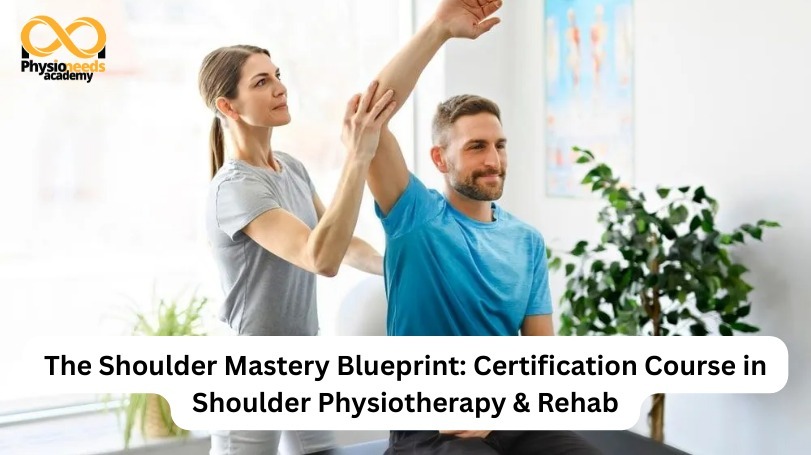
The Shoulder Mastery Blueprint: Certification Course in Shoulder Physiotherapy & Rehab

Shoulder pain is one of the most common complaints seen in clinics today. From desk workers with posture-related strain to athletes with rotator cuff injuries, the shoulder is complex, mobile—and highly vulnerable.

Yet many professionals feel uncertain when managing stubborn shoulder cases.

If you’ve ever thought,
“Why isn’t this shoulder improving?”
or
“Am I missing something in my assessment?”

Then a Certification Course in Shoulder Physiotherapy and Rehab may be exactly what your career needs.

Why the Shoulder Is So Challenging

The shoulder is not just one joint—it’s a system. It includes:

  • Glenohumeral joint
  • Scapulothoracic movement
  • AC and SC joints
  • Rotator cuff muscles
  • Ligaments, labrum, and neural structures
Even a small imbalance can create pain, instability, or long-term dysfunction. This is where structured Shoulder physiotherapy training becomes essential. It teaches you to see beyond symptoms and treat the root cause.

What Makes a Shoulder Physiotherapy Course Different?

A specialized Shoulder physiotherapy course goes far beyond basic exercises. It trains you to:

  • Perform detailed clinical assessments
  • Identify impingement, instability, SLAP lesions, frozen shoulder, and rotator cuff pathology
  • Understand scapular biomechanics
  • Apply manual therapy with precision
  • Design stage-wise rehabilitation protocols
  • Create safe return-to-play programs
Instead of guessing, you begin treating with clarity and confidence.

The Importance of Structured Shoulder Rehabilitation

Many patients fail to improve because treatment skips proper progression. 

True Shoulder rehabilitation follows a systematic pathway: 

Pain Control & Inflammation Management Early mobilization, taping, gentle activation. 

Mobility Restoration Capsular stretching, joint mobilizations, scapular control. 

Strength & Neuromuscular Control Rotator cuff strengthening, motor control retraining. 

Functional Reintegration Sport-specific or activity-specific drills. 

A strong foundation in Shoulder rehabilitation ensures that you don’t just reduce pain—you restore performance.

Why Get a Physiotherapy Certification in Shoulder Rehab?

In today’s competitive healthcare environment, specialization matters. 

A recognized Physiotherapy certification:

  • Adds credibility to your clinical profile
  • Builds patient trust
  • Enhances career opportunities
  • Helps you stand out in sports and orthopedic settings
When that certification focuses on shoulder management, you position yourself as a go-to expert in upper-limb rehab.

Who Should Take This Course?

A Physiotherapy shoulder course is ideal for:

  • Practicing physiotherapists
  • Sports therapists
  • Orthopedic rehab specialists
  • Fresh graduates wanting strong clinical foundations
  • Professionals working with overhead athletes
Whether you work in a hospital, sports academy, or private clinic, shoulder expertise is always in demand.

What You’ll Learn in a Shoulder Rehab Certification

A high-quality Shoulder rehab certification typically includes:

  • Detailed shoulder anatomy and biomechanics
  • Special tests and differential diagnosis
  • Manual therapy techniques
  • Dry needling and soft tissue release (where applicable)
  • Taping strategies
  • Post-surgical rehab protocols
  • Return-to-sport criteria
This is not just theory—it’s skill-based mastery.